The Mind-Blowing Physics Behind Floating Giants
Picture this: a cargo ship weighing 200,000 tons—heavier than 30,000 elephants—gliding effortlessly across the ocean. Steel sinks, right? So how does a massive metal vessel float while a small steel ball drops straight to the bottom? The answer lies in one of physics’ most elegant principles discovered over 2,000 years ago.
Archimedes’ Principle: The Secret to Ship Buoyancy
Greek mathematician Archimedes discovered that any object immersed in fluid experiences an upward force equal to the weight of fluid it displaces. For ships, this means that as long as the vessel displaces water weighing more than the ship itself, it floats.
Here’s the genius of ship design: while ships are built from dense steel, they’re not solid blocks. Instead, naval architects create hollow structures—think of ships as giant steel bowls. The hull contains vast empty spaces filled with air, dramatically reducing the vessel’s overall density. When a 100,000-ton ship enters water, it displaces more than 100,000 tons of water, creating enough upward buoyant force to keep it afloat.
Why Shape Matters More Than Weight
A solid steel cube would sink immediately because its density exceeds water’s density. But spread that same steel into a ship’s hull shape, and suddenly it floats. The secret? Volume versus weight ratio.
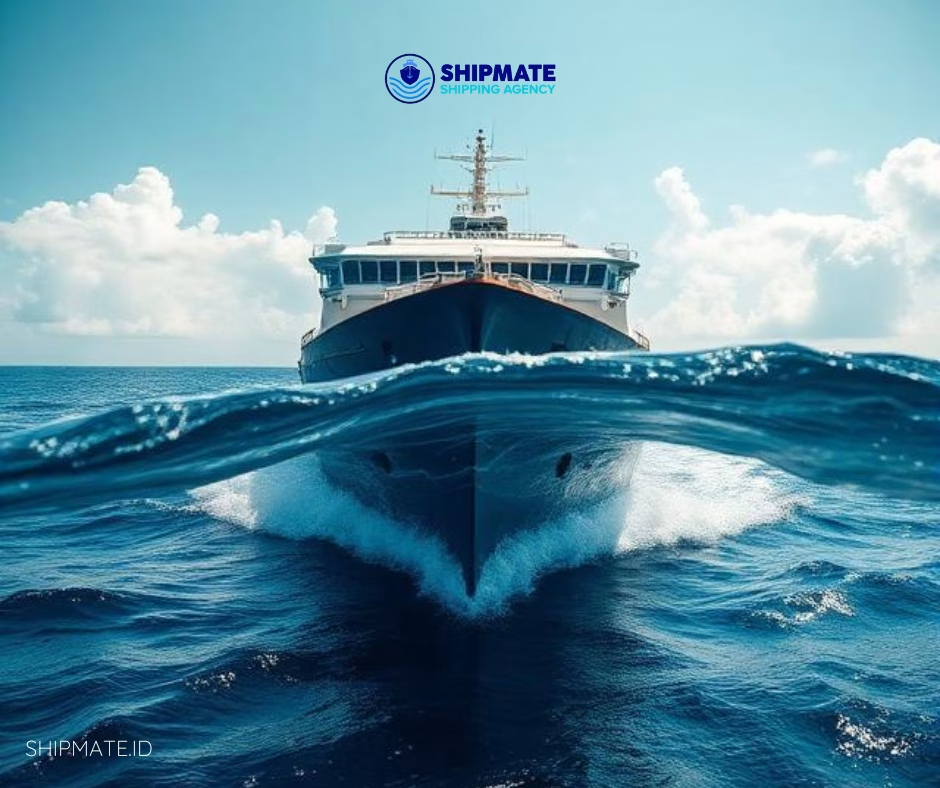
Ships are designed with wide, deep hulls that maximize water displacement while maintaining structural integrity. The waterline—where hull meets water—represents the equilibrium point where displaced water weight equals ship weight. Load more cargo, and the ship sits lower; unload, and it rises higher.
Real-World Application: Stability and Safety
Understanding buoyancy isn’t just physics class trivia—it’s critical for maritime operations. Ship stability depends on proper weight distribution, ballast management, and loading calculations. Overloading or improper cargo distribution can compromise buoyancy, creating dangerous conditions.
For vessels calling at ports like Batam, precise load calculations ensure safe operations. Professional ship agency services verify that vessels maintain proper draft, stability requirements, and compliance with port regulations regarding maximum displacement.
ShipMate in Batam understands that maritime operations blend physics with practical expertise. Our ship agency team ensures your vessel’s loading plans meet both safety standards and operational efficiency, keeping your floating marvels exactly where they belong—safely on the water.
Curious about vessel operations and maritime expertise? Visit shipmate.id and discover how we keep shipping science and safety in perfect balance.
Where science meets the sea—that’s where we excel.